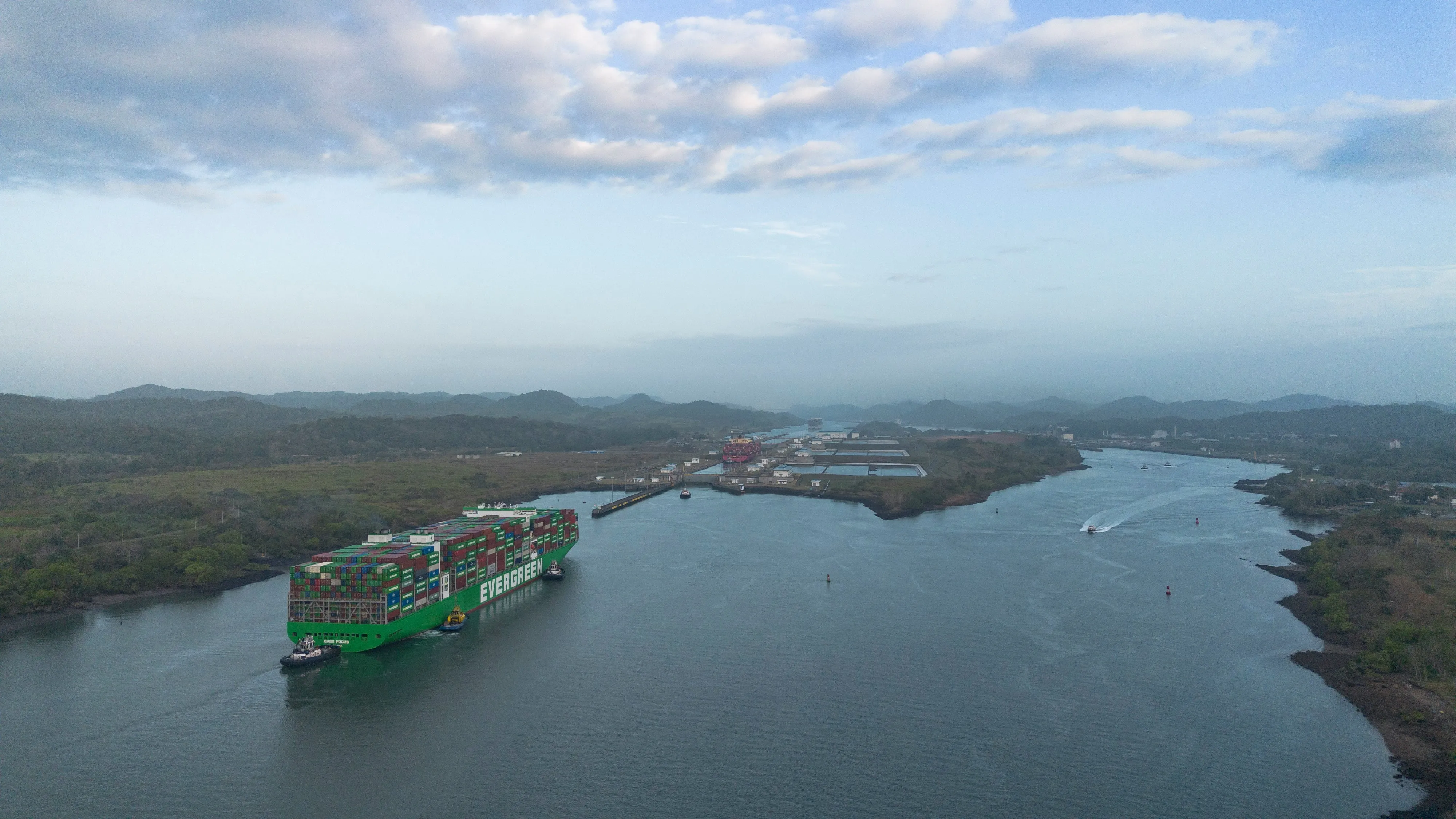
The Panama Canal Authority (ACP) closed on Thursday, July 23, 2026 the period of receipt of documents from companies interested in participating in the prequalification for the development of the Energy Corridor, a project with as its main axis a pipeline that could require an investment of between $4.2 billion and $8 billion.
The submitted documentation shall be evaluated in accordance with the legal, technical and financial criteria set out in the Pletalification Act and its amendments.
Once this process has been completed, the ACP will publish a list of prequalified companies that will advance to the next phase, focused on interaction and dialogue with select participants.
The Energy Corridor aims to strengthen the logistics platform of the Panama Canal as a result of changes in the global energy market, particularly through the transport of natural gas fluids between the Atlantic and the Pacific.
The infrastructure would have an area of about 76 km and would operate as a unidirectional system from the Atlantic to the Pacific.
The project includes three separate systems for propane, butane and ethane transport with a co-rated capacity of 2.5 million barrels daily.
The construction of tanks with a total capacity to store 12 million barrels, with an equal share of them: 6 million barrels in the Atlantic and 6 million barrels in the Pacific.
The estimated investment will depend on how the phases and products covered by the project are structured.
According to the preliminary data published by the ACP, the amount could be between $4.2 billion and $8 billion depending on the model to be selected.
The ACP estimates that construction of the pipeline will generate approximately 6,500 jobs while at its stage of operation some 9,700 jobs could be created.
In economic terms, the project would produce income to the country for about $165 million a year during construction and about $1.5 billion during its operation as projected by the Canal.
The prequalification process began with the publication of the declaration on 30 January 2026 and has advanced under the Concessions Regulation of the Panama Canal Authority.
A period of clarification was developed during this phase and three amendments were issued and documentation was received from interested companies.
The ACP noted that the procedure aims at ensuring transparency and competitiveness and at identifying companies with the legal, technical and financial capacity to implement the initiative.
The goal of the Panama Canal is for the Energy Corridor to start operations by mid 2031.
The entity indicated that the company’s response during the prequalification phase has been positive.
In January some of the companies interested in the project and met with the Canal’s authorities, including: ENEOS, Energy Transfer, ExxonMobil, Enterprise Products Partners, Chevron, Fortress Investment Group, Gyxis Corporation, Itochu Corporation, NMDC Group, Vopak, Astomos Energy, Kawasaki Kisen Kaisha, Iwatani, I Squayed, Movement Industries, Otamerica (Oiltanking America), Phillips, Ulsuzo Corporation, and Sumitomo (SMBC).
The ACP did not distribute at the stage of receipt of the document for the prequalification, which and how many of these companies are finally participating, information to be published at the following stage of the process.