The Panama Metro collects about $5 million a year with non-tariff income, resources that allow to fund part of the operation of the system of Lines 1 and 2 and that will also be incorporated into the future Line 3.
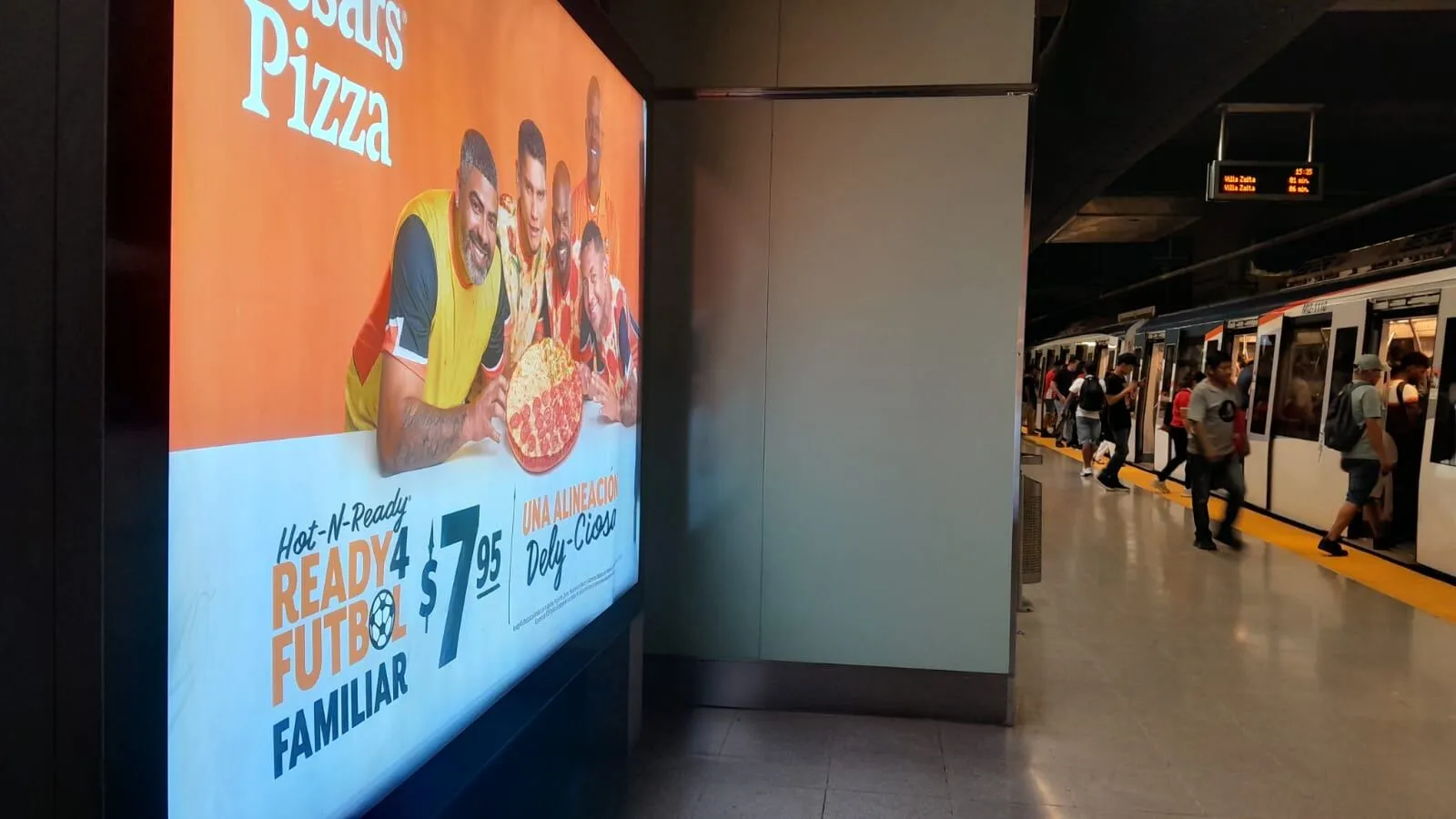
Non-tariff income from the Metro come mainly from the advertising installed at stations and trains as well as from ATM from public and private banks and rental of fiber optics. It was reported by the operations and maintenance office of Panama Metro and explain that, as well as collection of tickets, the system has a second source of income that, coupled with collection of prices, accounts for about 56 million dollars a year.
Those resources cover about 50 per cent of the company’s operational costs while the other 50 per cent - about $60 million - are financed by the General State Budget.
Operating costs currently exceed $116 million a year.
The entity emphasized that these revenues are crucial to ensuring maintenance of infrastructure, cleanliness of stations and continuity of service of a system that carries an average of 440 thousand users daily.
As part of its strategy to strengthen non-tariff revenues, the Panama Metro has already drawn up a statement of objections for the granting of parking spaces of the Villa Zaíta Exchanger, situated at line 1, which will also cover commercial and advertising spaces.
According to the state company, the concession will cover not only the administration of parking spaces but also the operation of about 600 square metres of commercial and advertising spaces of the interchanger.
The company stated that the goal was for the concessionaire to generate the necessary resources to cover the operation and maintenance of this new infrastructure and to contribute additional income to the Canal of Panama.
According to planning, the concession will have to be awarded before the end of 2026, so that the interchanger has an manager for parking and commercial areas.
The Panama Metro advanced that this non-tariff income model will be expanded as soon as the Line 3, currently under construction in West Panama come into operation.
To this end, aims at strengthening new sources of income through advertising, ATM, telecommunications and other supplementary services as well as charging.
The company currently works with a future bid to conduct a study that will define the new charging system throughout the network, considering that the system will reach about 60 km of extension, connecting Future City with Lines 1 and 2 and that the demand will be estimated at 160,000 passengers daily on Line 3.
That analysis will allow us to figure out how users will be charged for their displacement within the integrated network, the Panama Metro reported.