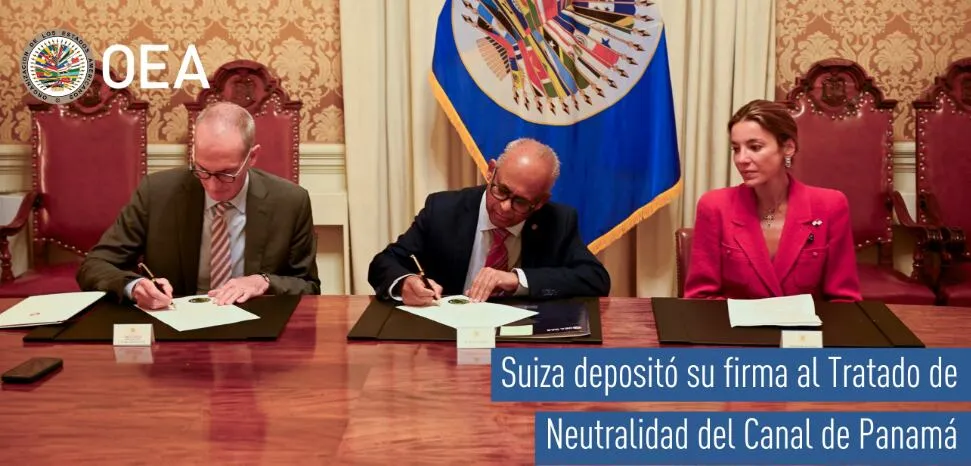
Switzerland’s instrument of accession to the Treaty of Neutrality that governs the operation of the Panama Canal was deposited with the Organization of American States (OAS) on Tuesday, the Panamanian Government reported.
The Treaty relative to the Permanent Neutrality and Operation of the Panama Canal, known as the Treaty of Neutrality, was signed on September 7, 1977 as part of the Torrio-Carter Treaties between Panama and the United States at the headquarters of the OAS, an body that acts as an official repository of registration.
“Switzerland is the number 41 state to sign the accession protocol, including the OAS Member States,” stated the regional body this Tuesday.
In a statement, the Panamanian Government stated that the event held at the OAS and chaired by its Secretary General, Albert Ramdin, “reaffirms Switzerland’s historic commitment to peace, neutrality, international law and the preservation of the free functioning of one of the most important maritime routes in the world.” The Government of Panama announced last May 13 that Switzerland had been a party to the Neutrality Treaty and appreciated that this step sent “a clear message to the world about the strategic importance” of this asset for “international trade and stability of the Western Hemisphere.” “The recent accessions represent a significant support by the international community for the legal regime that guarantees the permanent neutrality of the Panama Canal and strengthens the principle that this interoceanic track should be open to ships from all nations, under conditions of equality, security and without discrimination,” said a communiqué from the Panamanian Chancellery.
The U.S. built the Canal at the beginning of the 20th century and operated it for more than eight decades, until its transfer to Panama on 31 December 1999.
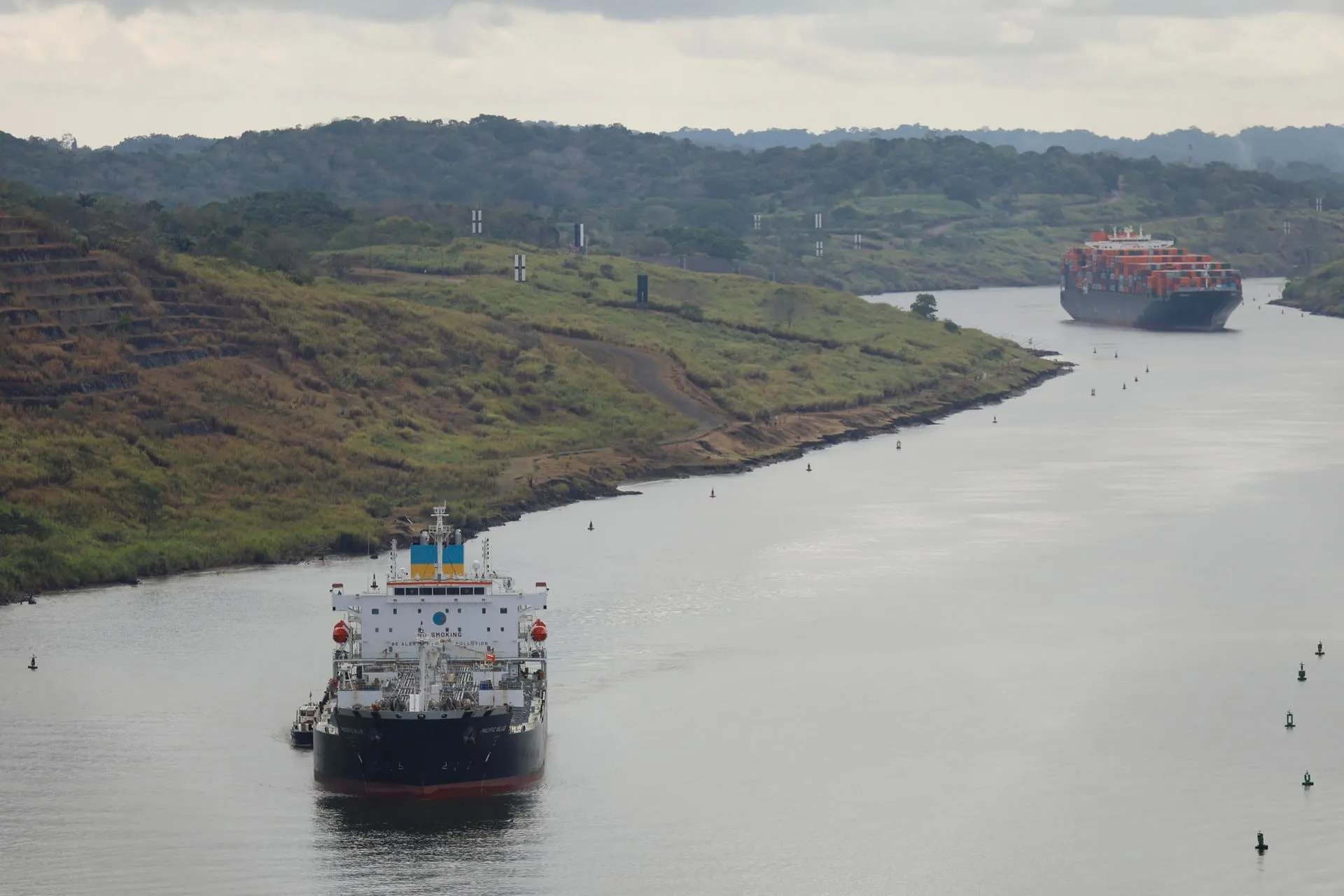
The 82-km seaport crossing between the Atlantic and the Pacific is governed by the Treaty of Neutrality, article II of which states that “Panama declares the neutrality of the Canal so that, both in time of peace and in time of war, it remains secure and open for the peaceful passage of ships from all nations in terms of full equality.” “The Republic of Panama and the United States of America agree to maintain the regime of neutrality established by this treaty,” adds article IV.
The Panamanian President’s Government, José Raúl Mulino, undertook a diplomatic offensive to join more adherents to the Treaty after his American counterpart, Donald Trump, threatened to recoup his Canal as an influence on China’s track, an assertion that was always rejected by Panama, and that demand that his country be prevented from interfering with his geopolitical fight with Beijing.
Panama and the United States experienced moments of tension in 2025 about the Canal’s issue that appear to have been put back, as stated by high officials from both governments, who propose to continue strengthening links in all areas.